SomaliREN IOI Librarian Training 2026 - UA

→ Africa/Mogadishu
Mogadishu

Mogadishu

Description

SomaliREN IOI Librarian Training 2026 - UbuntuNet Alliance

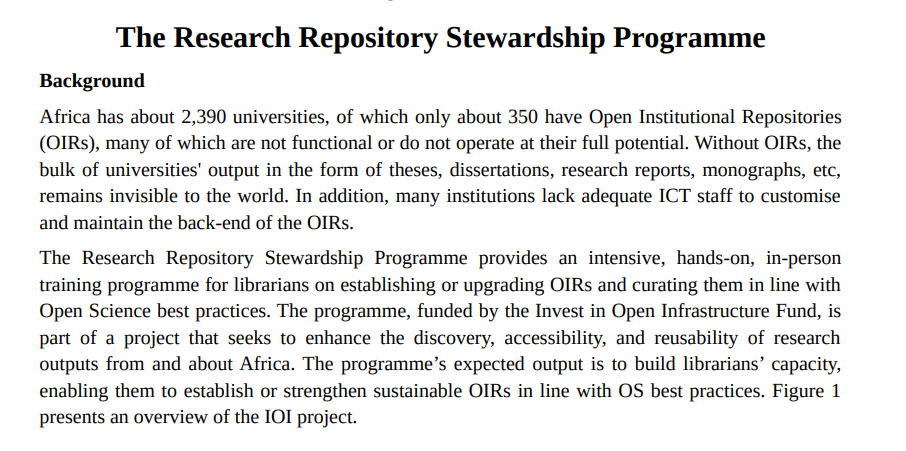
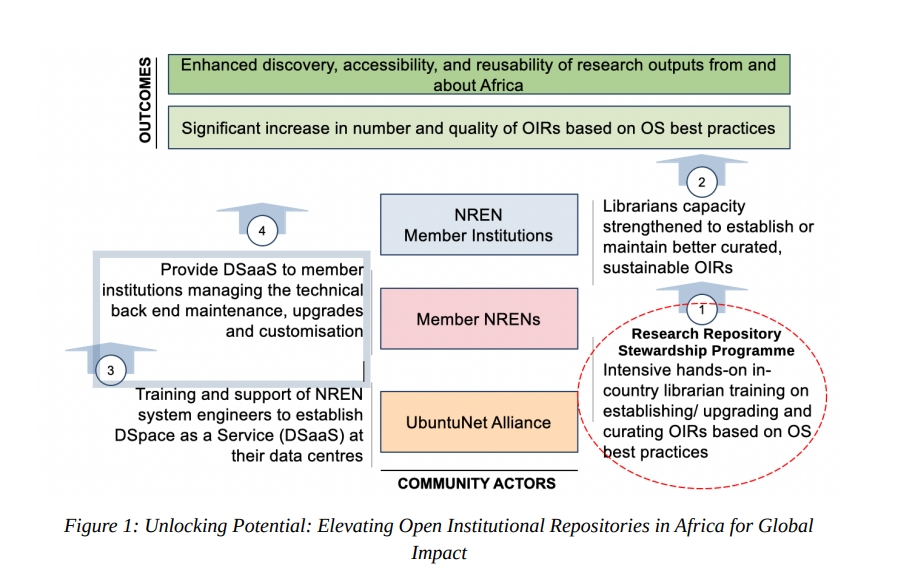
"Unlocking Potential: Elevating Open Institutional Repositories in Africa for Global Impact"


SomaliREN is pleased to coordinate local participation in the UbuntuNet Alliance IOI Librarian Training 2026, a three-day regional capacity-building workshop for librarians and information professionals working with institutional repositories across African higher education and research institutions.
What the training covers

Repository governance and management, metadata creation and quality assurance, persistent identifiers, content workflows, copyright and licensing, researcher engagement strategies, and approaches to improving repository interoperability, discoverability, and long-term sustainability. The training is practical and participatory - combining demonstrations, peer learning, and institutional experience-sharing - and closes with participants identifying concrete next steps for their own repositories.
Who should attend

SomaliREN is inviting each member institution to nominate one librarian or repository manager to represent it at this training. Nominees should be actively involved in, or responsible for, their institution's repository or scholarly communication activities.

Nominations close Monday, 31 August 2026. Space is limited to one nominee per member institution.

Contact Us
    • Session 1 – By the end of the session, participants shall be able to

      ◦ Explain the core structure of DSpace clearly and accurately.
      ◦ Distinguish between communities, collections, items, and bitstreams.
      ◦ Describe the main user roles, permissions, and workflow stages.
      ◦ Navigate a DSpace repository with confidence.
      ◦ Recognise the librarian’s operational responsibilities inside the
      platform.

    • 10:30
      Morning Break

      Tea Break

    • Session 2 – By the end of the session, participants shall be able to

      ◦ Explain the core structure of DSpace clearly and accurately.
      ◦ Distinguish between communities, collections, items, and bitstreams.
      ◦ Describe the main user roles, permissions, and workflow stages.
      ◦ Navigate a DSpace repository with confidence.
      ◦ Recognise the librarian’s operational responsibilities inside the
      platform.

    • 12:45
      Payer and Lunch
    • Session 3 – By the end of the session, participants shall be able to

      ◦ Assess institutional readiness for repository implementation or strengthening.
      ◦ Identify the minimum governance, policy, people, and workflow requirements for Success.
      ◦ Develop audience-specific advocacy messages for leadership, researchers, and partner units.
      ◦ Draft practical next steps for action at their own institutions.

    • 15:35
      Afternoon Prayer and Snacks
    • Day1 Session Recap
    • Session 1 – By the end of the session, participants shall be able to

      ◦ Explain what metadata is and why it matters for repository visibility.
      ◦ Apply the logic of core Dublin Core fields in a DSpace environment.
      ◦ Recognise common metadata quality problems and how to correct them.
      ◦ Interpret FAIR and CARE principles in practical repository work

    • 10:30
      Morning Break
    • Session 2 – By the end of the session, participants shall be able to:

      ◦ Curate metadata based on FAIR and CARE principles
      ◦ Recommend appropriate licenses and rights

    • 12:30
      Payer and Lunch
    • Session 3 – By the end of the session, participants shall be able to

      ◦ Have a clear understanding of the distinct roles of authentication and authorisation
      ◦ Understand, assign and manage the appropriate roles and responsibilities within the DSpace environment

    • 15:25
      Afternoon Prayer and Snacks
    • Day2 Session Recap
    • Session 1 – By the end of the session, participants shall be able to

      ◦ Understand, assign and manage the appropriate roles and responsibilities within the DSpace environment (Continued)

    • 10:40
      Morning Break
    • Session 2 – By the end of the session, participants shall be able to:

      ◦ Explain how metadata aggregation works and why it is critical for research visibility.
      ◦ Assess whether their repository is ready for metadata aggregation.
      ◦ Identify and correct common metadata quality issues that affect discoverability

    • 12:30
      Payer and Lunch
    • Session 3 – By the end of the session, participants shall be able to

      ◦ Identify the core policies required for a university repository
      ◦ Distinguish between mandatory (must-have) and recommended (shouldhave) policies
      ◦ Understand the purpose and risks addressed by each policy
      ◦ Outline the key components that each policy should contain
      ◦ Begin drafting or reviewing institutional repository policies

    • 15:10
      Afternoon Prayer and Snacks
    • Closing Session